
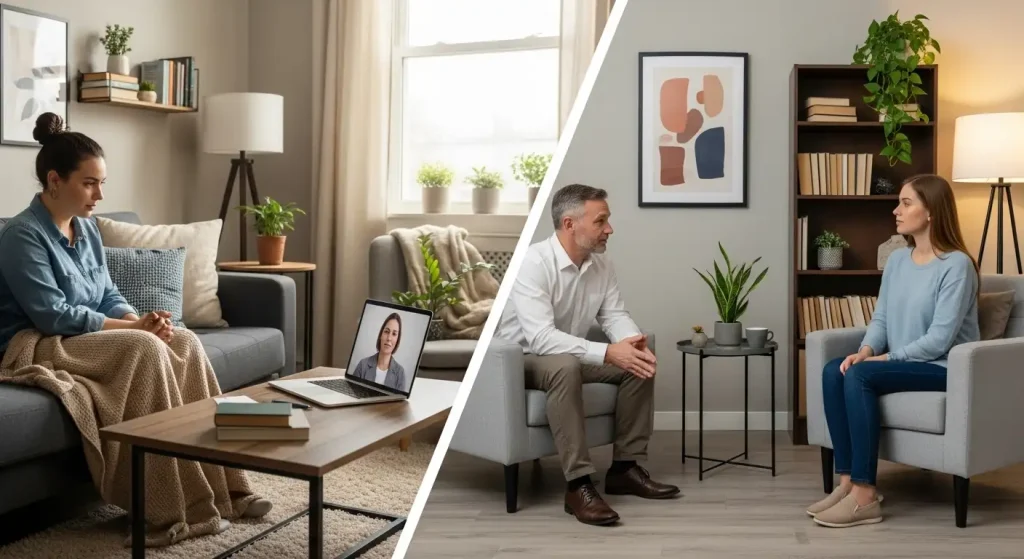
Teletherapy vs. In-Person Therapy: Trends in Mental Healthcare
Introduction: The Evolution of Mental Healthcare
The debate surrounding teletherapy vs in-person therapy has intensified dramatically since 2020, fundamentally reshaping how millions access mental healthcare. As digital technology continues transforming the healthcare landscape, understanding the nuances between virtual and traditional therapy has become essential for anyone seeking psychological support.
Mental healthcare trends now show that nearly 40% of therapy sessions in the UK, US, and Europe occur remotely. This shift represents more than temporary pandemic adaptation—it signals a lasting transformation in how we approach mental wellness. Both teletherapy and traditional face-to-face counselling offer distinct advantages, and choosing between them depends on individual needs, circumstances, and therapeutic goals.
Managing Stress Naturally: New Wellness Techniques to Try
Understanding Teletherapy: The Digital Revolution
What Is Teletherapy?
Teletherapy, also known as online therapy or e-therapy, delivers mental health services through digital platforms using video conferencing, phone calls, or messaging. This remote therapy option connects clients with licensed professionals without geographical constraints, offering unprecedented accessibility.
The online therapy effectiveness has been validated through numerous studies, with research indicating comparable outcomes to traditional methods for many conditions including depression, anxiety, and PTSD.
Key Virtual Therapy Benefits
Modern teletherapy platforms provide several compelling advantages:
Accessibility and Convenience
- Eliminates travel time and associated costs
- Enables access for rural or underserved communities
- Accommodates mobility challenges or disabilities
- Provides services across different time zones
Flexibility
- Wider appointment availability, including evenings and weekends
- Easier to fit sessions into busy schedules
- Reduced waiting times for initial appointments
- Option to continue care when travelling
Teletherapy vs In-Person Therapy: Ultimate Guide
Comfort and Privacy
- Attend sessions from familiar, comfortable environments
- Reduced anxiety about being seen entering a therapist’s office
- Greater sense of control over the therapeutic environment
- Particularly beneficial for social anxiety or agoraphobia
Cost-Effectiveness
- Often lower session fees than in-person alternatives
- No transportation expenses
- Reduced childcare needs during appointments
- Some insurance plans offer better coverage for telehealth services
Traditional In-Person Therapy: The Classic Approach
Why In-Person Therapy Remains Relevant
Despite the surge in teletherapy advantages, traditional face-to-face therapy continues offering unique benefits that digital platforms struggle to replicate. Understanding these strengths helps clarify when in-person sessions may be preferable.
Benefits of Traditional Therapy
Enhanced Therapeutic Connection Traditional therapy creates a dedicated, distraction-free space that can deepen the therapeutic alliance. The physical presence allows therapists to observe complete body language, subtle non-verbal cues, and energy shifts that video calls may miss.
Managing Stress Naturally: New Wellness Techniques
Specialized Treatment Modalities Certain therapeutic approaches work better in person:
- EMDR (Eye Movement Desensitization and Reprocessing): Requires precise eye tracking
- Play therapy: Needs physical toys and interactive materials
- Somatic therapies: Involve physical awareness and movement
- Art therapy: Benefits from hands-on creative materials
- Group therapy: Creates stronger interpersonal connections face-to-face
Structured Boundaries Physical separation between home and therapy office helps many clients mentally transition into therapeutic work. This boundary can be especially important for those with chaotic home environments or difficulty compartmentalizing.
Crisis Management In-person settings provide immediate access to emergency protocols if a client experiences severe distress, suicidal ideation, or psychiatric emergencies requiring immediate intervention.
Mental Healthcare Trends: What the Data Shows
Current Usage Patterns
Recent mental healthcare trends reveal fascinating patterns in how different demographics engage with therapy options:
Age Demographics
- 18-34 year olds: 67% prefer teletherapy options
- 35-54 year olds: 52% use mixed approaches
- 55+ year olds: 61% prefer traditional in-person sessions
Geographic Distribution Urban areas show roughly equal splits between teletherapy and in-person therapy, while rural communities increasingly rely on virtual therapy benefits due to limited local provider availability.
Personalized Medicine: 5 Powerful Ways It’s Transforming Care
Hybrid Models Gaining Traction
One of the most significant mental healthcare trends is the emergence of hybrid therapy models. Many practitioners now offer flexible arrangements where clients alternate between virtual and in-person sessions based on convenience, topic sensitivity, or therapeutic needs.
This approach maximizes teletherapy advantages whilst preserving the benefits of face-to-face connection when most valuable.
Comparing Online Therapy Effectiveness
What Research Reveals
Multiple meta-analyses examining online therapy effectiveness have produced encouraging findings:
Comparable Outcomes Studies published in the Journal of Psychological Disorders and JAMA Psychiatry demonstrate that cognitive behavioural therapy (CBT) delivered via teletherapy produces outcomes statistically equivalent to in-person treatment for:
- Depression and anxiety disorders
- PTSD and trauma-related conditions
- Panic disorder
- Obsessive-compulsive disorder
- Eating disorders (with some exceptions)
Client Satisfaction Survey data indicates 85% of teletherapy users report satisfaction levels equal to or exceeding their expectations, with many appreciating the reduced barrier to accessing care.
Retention Rates Interestingly, some studies suggest higher session attendance and lower dropout rates with teletherapy, possibly due to reduced logistical barriers.
7 Powerful Gut Health Trends Transforming Wellness in 2025
When In-Person Therapy May Be Superior
Despite positive findings about online therapy effectiveness, certain situations still favour traditional approaches:
- Severe mental health crises requiring immediate intervention
- Complex trauma work requiring advanced somatic techniques
- Clients with limited technology access or digital literacy
- Severe dissociative disorders
- Initial assessments for medication management
- Court-mandated therapy requiring specific documentation
Making Your Choice: Teletherapy vs In-Person Therapy
Key Decision Factors
When weighing teletherapy vs in-person therapy, consider these essential factors:
Your Specific Needs
- Nature and severity of your mental health concerns
- Comfort with technology
- Need for specialized therapeutic modalities
- Crisis risk level
10 Amazing Smart Home 2025 Trends: IoT Revolution Explained
Practical Considerations
- Geographic location and provider availability
- Schedule flexibility requirements
- Budget constraints
- Transportation access
- Privacy in your home environment
Personal Preferences
- Comfort discussing sensitive topics from home
- Importance of physical therapeutic space
- Preference for non-verbal communication cues
- Need for structured boundaries
Questions to Ask Potential Therapists
Before committing to either format, discuss these points with prospective therapists:
- Do you offer both teletherapy and in-person options?
- What platform do you use for virtual sessions, and is it HIPAA/GDPR compliant?
- How do you handle technical difficulties during sessions?
- What’s your protocol for emergencies during remote sessions?
- Can we switch between formats if my needs change?
Revolutionary Quantum Computing 2025 Applications Explained
Future Mental Healthcare Trends
Emerging Technologies
The landscape of teletherapy vs in-person therapy continues evolving with emerging technologies:
Virtual Reality Therapy VR applications are showing promise for exposure therapy, treating phobias, and PTSD treatment, potentially offering immersive experiences that bridge the gap between remote and in-person care.
AI-Assisted Therapy Artificial intelligence tools are beginning to supplement human therapists by providing between-session support, mood tracking, and personalized coping strategies.
Biometric Integration Wearable devices that monitor heart rate variability, sleep patterns, and stress markers are being integrated into therapeutic interventions, providing objective data regardless of session format.
Conclusion: The Best of Both Worlds
The ongoing discussion around teletherapy vs in-person therapy ultimately presents a false dichotomy. Rather than viewing these as competing options, current mental healthcare trends suggest they’re complementary approaches serving different needs within the broader mental health ecosystem.
Online therapy effectiveness has been thoroughly validated for many conditions, making virtual therapy benefits accessible to millions who might otherwise go without care. Simultaneously, traditional in-person therapy maintains its essential role for complex cases, specialized treatments, and those who prefer face-to-face connection.
The future of mental healthcare likely isn’t choosing one over the other, but thoughtfully integrating both approaches based on individual circumstances, therapeutic goals, and personal preferences. As telehealth infrastructure improves and practitioners gain experience with hybrid models, clients will increasingly enjoy the flexibility to access the right type of care at the right time.
Whether you choose teletherapy, traditional sessions, or a combination, the most important step is reaching out for support. Both formats provide legitimate pathways to improved mental wellbeing, and the best therapy is ultimately the therapy you’ll actually attend.