
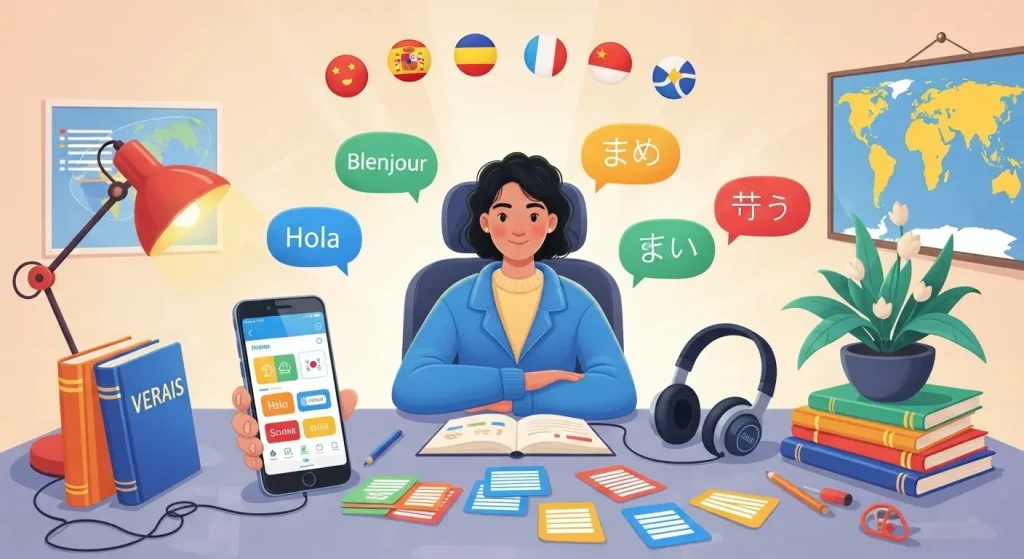
Learning a new language opens doors to incredible opportunities, from career advancement to cultural enrichment and cognitive benefits. Learning a language is a complex, time-intensive task that requires dedication, persistence, and hard work. However, with the right language learning tips and strategies, you can accelerate your progress and achieve fluency faster than you ever thought possible.
In 2024, there is a greater emphasis on learning languages through practical usage rather than rote memorization. This involves more real-life conversations and less classroom-based grammar exercises. Whether you’re a complete beginner or looking to improve your existing skills, this comprehensive guide provides proven language learning methods used by successful polyglots and language experts worldwide.
How to Learn New Skills Online: Complete Guide to Online Learning Success
Why Effective Language Learning Tips Matter
The Science Behind Successful Language Acquisition
Modern language learning research reveals that traditional classroom methods often fall short of creating true fluency. Effective language learning tips focus on practical application, immersion techniques, and consistent practice that mirrors how children naturally acquire languages.
Benefits of Learning Multiple Languages
- Enhanced cognitive function and memory
- Improved career prospects and earning potential
- Deeper cultural understanding and global connections
- Increased confidence and communication skills
- Better problem-solving abilities
Sustainable Fashion Brands to Watch
Essential Language Learning Tips for Beginners
Set Clear and Realistic Goals
SMART Goal Framework for Language Learning:
- Specific: Define exactly what you want to achieve (conversational fluency, business proficiency, etc.)
- Measurable: Set concrete milestones (learn 100 new words, complete 10 conversations)
- Achievable: Choose realistic timeframes based on your schedule
- Relevant: Align goals with your personal or professional needs
- Time-bound: Establish clear deadlines for each milestone
Start with High-Frequency Vocabulary
Focus your initial efforts on the most commonly used words in your target language. The Pareto Principle applies perfectly to language learning – 20% of vocabulary typically covers 80% of everyday conversations.
Priority Vocabulary Categories:
- Essential greetings and polite expressions
- Numbers, days, and time expressions
- Basic family and personal information
- Common verbs and action words
- Food, travel, and daily activity terms
Develop a Consistent Daily Practice Routine
One of the finest methods for learning a new language is to take tiny steps and focus on research. Every day, spend a few minutes writing out a sentence in the language you’d want to learn.
Daily Practice Schedule (15-30 minutes):
- 5 minutes: Vocabulary review using spaced repetition
- 10 minutes: Listening practice (podcasts, music, or videos)
- 10 minutes: Speaking practice (reading aloud or conversation)
- 5 minutes: Writing practice (journal entries or translations)
Fitness Routines at Home Without Gym: Complete Guide to Bodyweight Workouts
Advanced Language Learning Strategies
Immersion Techniques Without Travel
Create a Language Bubble:
- Change your phone and computer language settings
- Watch movies and TV shows with subtitles in your target language
- Listen to podcasts and audiobooks during commutes
- Follow social media accounts in your target language
- Read news articles and blogs daily
The Polyglot Method: Learning from Multiple Language Experts
Successful polyglots share common strategies that accelerate language acquisition:
The Shadowing Technique: Listen to native speakers and repeat what they say simultaneously. This improves pronunciation, rhythm, and natural speech patterns.
Language Laddering: Use a language you already know (besides your native language) to learn a third language. This reinforces both languages simultaneously.
The Goldilocks Principle: Choose content that’s challenging but not overwhelming – about 70% comprehensible with 30% new material.
Common Mental Health Issues & Self-Care: A Complete Guide to Better Wellbeing
Best Language Learning Methods and Tools
Top Language Learning Apps for 2024
Language learning apps can be great resources for picking up a new language. These 12 unique apps are the best learning language apps in 2024 so far—whether you prefer classic structured courses, interactive games and flashcards, or language exchanges through your phone!
Comprehensive Learning Platforms:
- Duolingo: Gamified lessons perfect for daily habit building
- Babbel: Practical, conversation-focused courses
- Rosetta Stone: Immersive method without translation
- Busuu: AI-powered personalized learning paths
Specialized Tools:
- Anki: Spaced repetition for vocabulary mastery
- HelloTalk: Language exchange with native speakers
- Speechling: AI pronunciation feedback and coaching
- LingQ: Extensive reading with built-in dictionary
Traditional Learning Resources
Books and Materials:
- Grammar guides for structured learning
- Frequency dictionaries for efficient vocabulary building
- Literature in your target language for advanced practice
- Workbooks for writing and grammar exercises
Audio Resources:
- Pimsleur for audio-first learning approach
- Language podcasts for intermediate learners
- Audiobooks with text for simultaneous reading and listening
- Music playlists for cultural immersion
Stress Management Techniques: 12 Proven Methods to Reduce Anxiety
Overcoming Common Language Learning Challenges
Breaking Through Intermediate Plateaus
The intermediate plateau is a common frustration where progress seems to stall. Combat this with:
Diversify Your Content:
- Switch from beginner materials to authentic native content
- Engage with different topics and genres
- Join online communities and forums
- Start creating content in your target language
Focus on Output Practice:
- Write daily journal entries
- Record yourself speaking about various topics
- Participate in language exchange conversations
- Give presentations or teach others what you’ve learned
Maintaining Motivation and Consistency
Motivation Strategies:
- Connect with the culture behind the language
- Set mini-rewards for achieving milestones
- Track progress visually with charts or apps
- Find language learning partners or communities
- Remind yourself regularly of your “why” for learning
Dealing with Fear of Making Mistakes
Reading the news in your target language is an effective language learning method and a great way to stay connected to current events happening in the country, regardless of your level. Embrace mistakes as learning opportunities rather than failures.
Confidence Building Techniques:
- Practice with language learning apps before real conversations
- Start with written communication to build confidence
- Record yourself speaking to identify improvement areas
- Remember that native speakers make mistakes too
Overrated vs Underrated: 5 Popular European Destinations and Their Cheaper Alternatives
Accelerated Learning Techniques
The 80/20 Rule for Language Learning
Focus your efforts on the 20% of language elements that will give you 80% of communication ability:
Priority Elements:
- 1,000 most frequent words
- Basic grammar patterns (present, past, future tenses)
- Common sentence structures
- Essential pronunciation rules
- Cultural context and expressions
Memory Techniques and Mnemonics
Effective Memory Strategies:
- Keyword Method: Associate new words with similar-sounding words in your native language
- Memory Palace: Create visual stories and locations for vocabulary
- Chunking: Group related words and phrases together
- Contextual Learning: Learn words within meaningful sentences and situations
Spaced Repetition for Vocabulary Mastery
Spaced repetition is one of the most effective strategies for improving vocabulary retention. This scientifically-proven method schedules review sessions at increasing intervals to maximize long-term memory.
Ultimate Guide to London on a Budget
Creating Your Personal Language Learning Plan
Assessment and Goal Setting
Initial Assessment:
- Determine your current level using standardized tests
- Identify your learning style preferences
- Assess available time and resources
- Define specific use cases for the language
Timeline Planning:
- Months 1-3: Foundation building with basic vocabulary and grammar
- Months 4-6: Intermediate conversation and reading skills
- Months 7-12: Advanced fluency and specialized vocabulary
- Year 2+: Maintenance and cultural depth
Tracking Progress and Adjusting Strategies
Progress Metrics:
- Vocabulary size and retention rates
- Listening comprehension improvements
- Speaking fluency and confidence levels
- Reading speed and comprehension
- Writing accuracy and complexity
10 Hidden Gems in England You Need to Visit Beyond London
Frequently Asked Questions (FAQ)
How long does it typically take to become fluent using these language learning tips?
The time to achieve fluency varies greatly depending on the language, your native language, study intensity, and personal aptitude. Generally, with consistent daily practice using effective language learning methods, you can achieve conversational fluency in 6-18 months. Languages closer to your native tongue (like Spanish for English speakers) typically take 600-750 hours of study, while more distant languages (like Mandarin or Arabic) may require 2,200+ hours. Using proven language learning tips and maintaining consistency is more important than the total time invested.
What are the most effective language learning methods for busy adults?
The most effective language learning strategies for busy adults focus on integration into daily routines and maximizing limited study time. Micro-learning approaches work best: 15-20 minutes of daily practice using spaced repetition apps, listening to podcasts during commutes, and switching phone settings to your target language. Language learning apps like Duolingo or Babbel are designed for busy schedules, offering bite-sized lessons. Additionally, passive exposure through music, audiobooks, and changing entertainment consumption to your target language helps maintain contact without dedicated study time.
Can you really learn a language effectively using just mobile apps?
While language learning apps are excellent tools and can provide substantial progress, they work best as part of a comprehensive approach rather than standalone solutions. Apps excel at vocabulary building, grammar introduction, and maintaining daily practice habits. However, they typically lack sufficient speaking practice, cultural context, and advanced conversation skills. The most effective approach combines apps with conversation practice (HelloTalk, iTalki), authentic content consumption (news, movies, podcasts), and ideally some interaction with native speakers. Think of apps as your foundation, but supplement with real-world application for true fluency.
Clean Beauty Products with Viral Appeal
Start Your Language Learning Journey Today
Mastering a new language is one of the most rewarding intellectual challenges you can undertake. With these proven language learning tips and strategies, you have everything needed to begin your journey toward fluency. Remember that consistency beats intensity – daily practice with the right methods will take you further than occasional intensive study sessions.
The key to success lies in finding methods that match your learning style, maintaining consistent practice, and gradually increasing the challenge as you progress. Whether you choose traditional textbooks, modern apps, or immersive techniques, the most important step is to start today.
Ready to accelerate your language learning journey? Discover the best language learning resources, apps, and materials to support your goals.