Introduction
Navigating diet-specific cooking can feel overwhelming, especially when you’re balancing vegan and gluten-free requirements simultaneously. Whether you’re cooking for health reasons, ethical choices, food allergies, or simply exploring new culinary horizons, understanding how to create delicious meals within dietary restrictions is a valuable skill that opens up a world of flavorful possibilities.
The good news? Vegan gluten free recipes don’t mean sacrificing taste or variety. With the right knowledge, ingredients, and techniques, you can create satisfying meals that rival any traditional dish. This comprehensive guide will equip you with everything you need to master both vegan and gluten-free cooking, from essential pantry staples to practical cooking methods that make meal preparation effortless.
Whether you’re newly transitioning to these diets or seeking to expand your culinary repertoire, this guide will transform how you approach diet specific cooking and prove that restrictions can actually spark creativity in the kitchen.
Healthy & Quick Recipes: Your Guide to Delicious Meals in Minutes
Understanding Vegan and Gluten-Free Diets
What Makes a Diet Vegan?
Vegan cooking tips begin with understanding what veganism excludes: all animal products including meat, dairy, eggs, honey, and gelatin. This plant-based approach focuses on vegetables, fruits, grains, legumes, nuts, and seeds. The challenge lies in creating satisfying textures and complete nutrition without traditional protein sources.
Gluten-Free Essentials
Gluten free meal ideas require avoiding wheat, barley, rye, and their derivatives. Gluten is a protein that provides structure in baking and acts as a thickener in many processed foods. Those with celiac disease, gluten sensitivity, or wheat allergies must strictly avoid even trace amounts of gluten.
Combining Both Diets
When you’re working with vegan gluten free recipes, you’re eliminating two major ingredient categories simultaneously. This means being extra mindful about nutrition, particularly ensuring adequate protein, iron, calcium, vitamin B12, and fiber intake through careful ingredient selection.
10 Minimalist Home Decor Ideas for Small Apartments in 2025
Essential Pantry Staples for Diet-Specific Cooking
Gluten-Free Grains and Flours
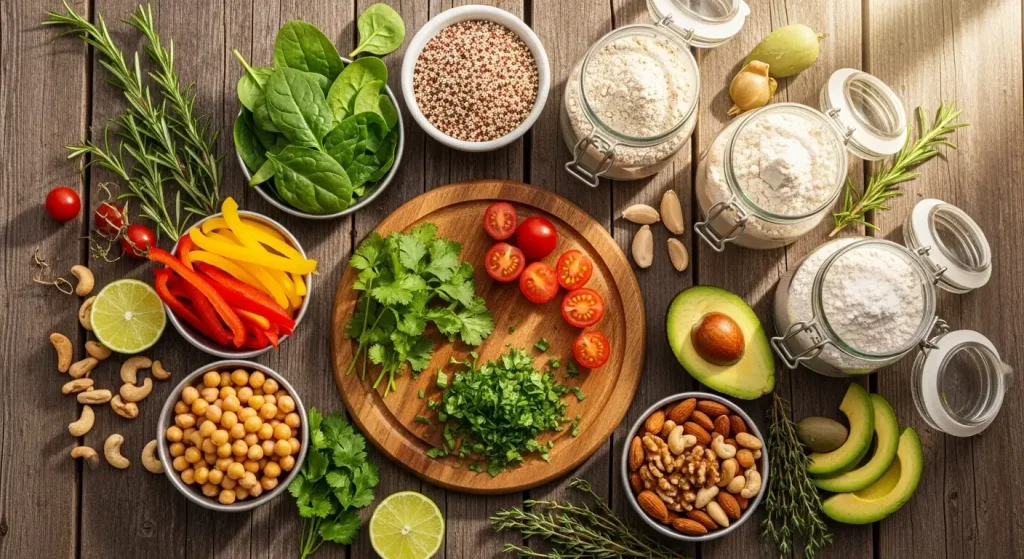
Building a well-stocked pantry is crucial for successful allergen free cooking. These ingredients form the foundation of countless recipes:
Whole Grains:
- Quinoa (complete protein with all essential amino acids)
- Brown rice and wild rice
- Millet and amaranth
- Certified gluten-free oats
- Buckwheat (despite the name, completely gluten-free)
Gluten-Free Flours:
- Almond flour (adds moisture and protein)
- Coconut flour (highly absorbent, use sparingly)
- Rice flour (neutral flavor, good for blending)
- Chickpea flour (protein-rich, excellent for savory dishes)
- Tapioca starch (provides binding and chewiness)
Plant-Based Protein Sources
Plant based recipes rely heavily on these protein powerhouses:
- Legumes: lentils, chickpeas, black beans, kidney beans
- Tofu and tempeh (ensure gluten-free varieties)
- Nuts and seeds: almonds, cashews, hemp seeds, chia seeds
- Nutritional yeast (adds cheesy flavor plus B vitamins)
- Plant-based protein powders (pea, hemp, rice)
Binding and Thickening Agents
Without eggs and traditional thickeners, these alternatives become essential:
- Flax eggs (1 tablespoon ground flaxseed + 3 tablespoons water)
- Chia eggs (same ratio as flax)
- Arrowroot powder (clear thickener for sauces)
- Psyllium husk (excellent binder for baking)
- Aquafaba (chickpea liquid, whips like egg whites)
10 Stylish Zero-Proof Cocktails to Try in 2025
Ingredient Substitutions Made Simple
Dairy-Free Alternatives for Vegan Cooking
Mastering vegan cooking tips includes knowing your dairy substitutes:
Milk Replacements:
- Oat milk (creamy, neutral flavor)
- Almond milk (light, slightly nutty)
- Coconut milk (rich, best for curries and desserts)
- Cashew milk (smooth, versatile)
Cheese Alternatives:
- Cashew cheese (blend soaked cashews with nutritional yeast)
- Store-bought vegan cheeses (check for gluten-free certification)
- Nutritional yeast (sprinkle for cheesy flavor)
Butter Substitutes:
- Coconut oil (1:1 ratio for baking)
- Vegan butter (ensure gluten-free)
- Nut butters (add richness to sauces)
Egg Replacements in Baking
Healthy diet recipes often need creative egg substitutes:
| Egg Function | Vegan Substitute | Best Used In |
|---|---|---|
| Binding | Flax or chia eggs | Muffins, pancakes |
| Leavening | Baking soda + vinegar | Cakes, quick breads |
| Moisture | Applesauce or mashed banana | Sweet baked goods |
| Structure | Aquafaba | Meringues, mousses |
10 Most-Anticipated TV Shows of 2025: Must-Watch Series Coming This Year
Five Delicious Vegan Gluten-Free Recipes
1. Creamy Coconut Curry with Chickpeas
This gluten free meal idea combines protein-rich chickpeas with vegetables in a aromatic coconut sauce over quinoa. Sauté onions, garlic, and ginger, add curry powder, coconut milk, and chickpeas, then simmer with spinach. Ready in 25 minutes.
2. Mediterranean Quinoa Bowl
A nutrient-dense plant based recipe featuring fluffy quinoa topped with roasted vegetables, chickpeas, cucumber, tomatoes, and tahini dressing. Meal prep friendly and packed with complete protein.
3. Gluten-Free Vegan Pancakes
These fluffy pancakes use a blend of rice flour, almond flour, and tapioca starch with flax eggs and almond milk. Perfect for diet specific cooking that doesn’t compromise on texture or taste.
4. Black Bean Sweet Potato Burgers
Hearty patties combining mashed sweet potato with black beans, gluten-free oats, and spices. These vegan gluten free recipes freeze beautifully for quick weeknight meals.
5. Thai-Inspired Peanut Noodles
Rice noodles tossed with vegetables and a rich peanut sauce made from natural peanut butter, tamari (gluten-free soy sauce), lime juice, and maple syrup. An easy allergen free cooking success.
10 Easy Weekend DIY Home Projects to Upgrade Your Space
Common Challenges and Solutions
Achieving Proper Texture in Baking
Diet-specific cooking often struggles with texture. Gluten provides elasticity while eggs add structure. Combat this by:
- Using multiple flour blends rather than single flours
- Adding xanthan gum or psyllium husk for binding
- Not overmixing batters (prevents gumminess)
- Allowing baked goods to cool completely before cutting
- Testing with toothpick (should come out clean, not wet)
Ensuring Complete Nutrition
When following healthy diet recipes with multiple restrictions:
- Combine grains and legumes for complete proteins
- Include fortified plant milks for calcium and vitamin B12
- Eat a rainbow of vegetables for varied nutrients
- Consider omega-3 supplements or flax/chia seeds daily
- Track iron intake through legumes, leafy greens, and fortified foods
Managing Cross-Contamination
For those with celiac disease or severe allergies:
- Use separate cutting boards and utensils
- Clean all surfaces thoroughly before cooking
- Store gluten-free items separately
- Read labels carefully for hidden gluten
- Choose certified gluten-free oats and grains
How to Build a Capsule Wardrobe on a Budget
Meal Planning for Success
Weekly Prep Strategies
Successful vegan gluten free recipes start with planning:
Sunday Preparation:
- Cook 2-3 types of grains (quinoa, rice, millet)
- Roast a variety of vegetables
- Prepare 2 protein sources (beans, marinated tofu)
- Make 2-3 sauces or dressings
- Portion snacks (hummus, energy balls, cut vegetables)
Mix-and-Match Approach: Create different meals throughout the week by combining prepared components with fresh elements. This prevents monotony while maintaining convenience.
DIY Home Organization Hacks for Small Spaces
Shopping Tips for Diet-Specific Ingredients
Reading Labels Effectively
Allergen free cooking requires vigilant label reading:
- Look for “Certified Gluten-Free” symbols
- Check for “may contain” statements
- Watch for hidden gluten (malt, modified food starch)
- Verify vegan status (casein, whey, gelatin)
- Note cross-contamination warnings
Budget-Friendly Shopping
Plant based recipes don’t have to break the bank:
- Buy dried beans and lentils in bulk
- Choose seasonal produce
- Make your own nut milks and flours
- Compare prices at different stores
- Use frozen vegetables for convenience and savings
Healthy Meal Prep Ideas for Busy Weekdays
Frequently Asked Questions
How do I get enough protein on a vegan gluten-free diet?
Meeting protein needs with vegan gluten free recipes is entirely achievable through strategic food combinations. Excellent sources include legumes (lentils provide 18g protein per cup), quinoa (8g per cup as a complete protein), tofu and tempeh (15-20g per serving), nuts and seeds, and plant-based protein powders. Combine different protein sources throughout the day to ensure you’re getting all essential amino acids. Most adults need 0.8g protein per kilogram of body weight, easily met through varied plant-based eating.
Can I bake bread without gluten and eggs?
Yes, creating delicious bread through diet specific cooking without gluten or eggs is possible with the right technique. Use a blend of gluten-free flours (rice, tapioca, potato starch), add xanthan gum or psyllium husk for structure, use flax eggs or aquafaba for binding, and incorporate yeast for rising. The key is proper flour ratios, adequate moisture, and allowing dough to rise in a warm environment. Many successful recipes use a wetter dough than traditional bread, baked in pans rather than free-form loaves.
What are the best resources for learning more vegan cooking tips?
Expanding your skills in vegan cooking tips and gluten free meal ideas is easier than ever with abundant resources. Look for specialized cookbooks from authors like Isa Chandra Moskowitz and America’s Test Kitchen’s gluten-free series. Online platforms like Minimalist Baker, Oh She Glows, and The Gluten-Free Vegan offer tested recipes. Join online communities and Facebook groups dedicated to these diets for support and recipe sharing. Consider taking online cooking courses specifically focused on plant-based and allergen-free cooking techniques.
How to Create a Personal Budget and Save Money
Transform Your Kitchen Today
Mastering diet-specific cooking empowers you to create meals that are both delicious and aligned with your health goals or ethical values. The journey from restriction to culinary freedom happens one recipe at a time, as you build confidence with new ingredients and techniques.
Remember that every expert in vegan gluten free recipes started exactly where you are now. With patience, practice, and the right resources, you’ll soon be creating meals that satisfy everyone at your table, regardless of dietary needs.