Staying physically active becomes increasingly important as we age, but finding the right exercises that are safe, effective, and easy to perform at home can feel challenging. The good news? You don’t need expensive equipment or a gym membership to maintain your strength, flexibility, and independence.
This comprehensive guide will walk you through the best low-impact home workouts for seniors, helping you stay active, healthy, and confident in your body’s abilities—all from the comfort of your own living room.
Healthy Breakfast Ideas to Support Weight Loss: 15 Delicious Options
Why Low-Impact Exercises Are Perfect for Seniors
Low-impact exercises minimize stress on your joints while delivering impressive health benefits. Unlike high-impact activities that involve jumping or running, these gentle movements protect your knees, hips, and back while still building strength and endurance.
Regular physical activity helps older adults maintain independence, reduce fall risk, manage chronic conditions, and improve overall quality of life. The Centers for Disease Control and Prevention recommends that seniors aim for at least 150 minutes of moderate-intensity aerobic activity per week, along with muscle-strengthening activities twice weekly.
Key Benefits of Home-Based Exercise
- Convenience: Exercise on your own schedule without traveling
- Safety: Familiar environment with no commute required
- Cost-effective: No gym fees or special equipment needed
- Privacy: Work out at your own pace without feeling self-conscious
- Consistency: Easier to maintain regular exercise habits
Preventing and Recovering from Burnout at Work: Your Complete Guide
Essential Safety Tips Before Starting
Before beginning any new fitness routine, consult with your healthcare provider, especially if you have existing health conditions or haven’t exercised regularly. Follow these safety guidelines:
- Warm up properly: Spend 5-10 minutes preparing your body with gentle movements
- Use sturdy support: Keep a stable chair or counter nearby for balance
- Wear appropriate footwear: Choose supportive, non-slip shoes
- Stay hydrated: Keep water accessible throughout your workout
- Listen to your body: Stop if you experience pain, dizziness, or shortness of breath
- Progress gradually: Start slowly and increase intensity over time
Best Chair Exercises for Seniors
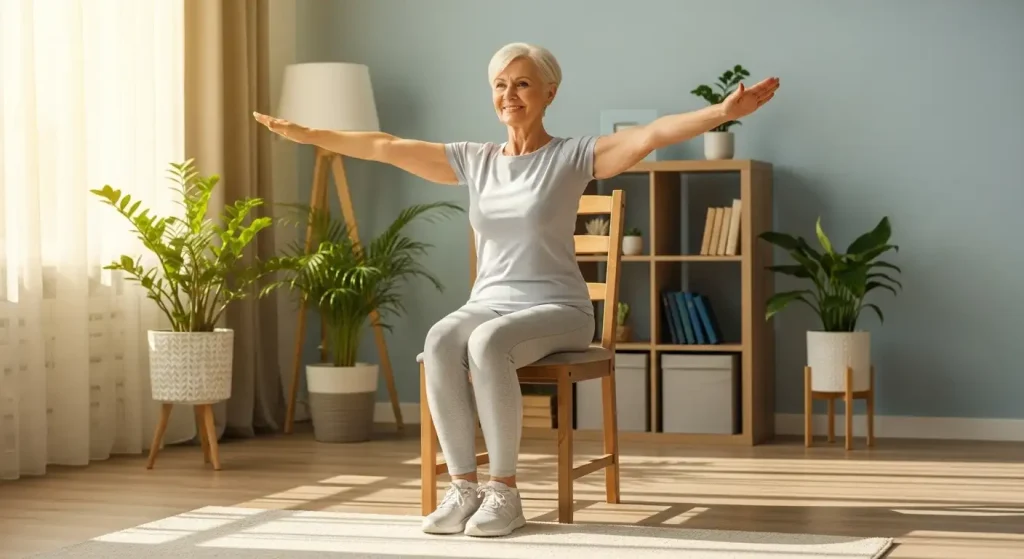
Chair-based movements provide excellent support while targeting all major muscle groups. These seated exercises are ideal for those with balance concerns or limited mobility.
1. Seated Marching
This cardiovascular exercise improves circulation and leg strength. Sit tall in a sturdy chair with feet flat on the floor. Lift one knee toward your chest, lower it, then repeat with the other leg. Continue alternating legs for 30-60 seconds. Keep your core engaged and maintain good posture throughout the movement.
Stress Management Techniques for a Busy Lifestyle
2. Seated Overhead Press
Building upper body strength helps with daily tasks like reaching high shelves. Hold light weights (or water bottles) at shoulder height with elbows bent. Press arms straight overhead, then slowly lower back to starting position. Complete 10-12 repetitions for 2-3 sets.
3. Ankle Circles
Improve ankle flexibility and reduce swelling with this simple movement. Extend one leg slightly and rotate your ankle in circles—10 times clockwise, then 10 times counterclockwise. Switch legs and repeat. This exercise promotes better circulation in your lower extremities.
4. Seated Torso Twist
Enhance spine mobility and core strength. Sit upright with arms crossed over chest. Slowly rotate your upper body to the right, hold for 2-3 seconds, return to center, then rotate left. Complete 8-10 repetitions on each side, moving deliberately and maintaining good posture.
5. Chair Stands
This functional exercise mimics the motion of getting up from a seated position—an essential skill for daily independence. Sit toward the front edge of your chair with feet hip-width apart. Lean slightly forward, then stand up using your leg muscles (use armrests if needed). Slowly sit back down with control. Work up to 10-15 repetitions.
Sleep Hygiene: Tips for Falling Asleep Faster
Standing Balance Exercises for Older Adults
Improving balance significantly reduces fall risk and increases confidence in daily activities. Always perform these exercises near a wall or sturdy surface for support.
1. Single-Leg Stands
Hold onto a counter or chair back. Lift one foot slightly off the ground and hold for 10-30 seconds. Switch legs and repeat. As your balance improves, try using lighter support or no support at all.
2. Heel-to-Toe Walk
Place one foot directly in front of the other, touching heel to toe, as if walking a tightrope. Take 10-15 steps forward, then turn around and return. This challenges your balance while improving coordination.
3. Standing Leg Raises
Hold a counter or chair for support. Stand on one leg and slowly lift the other leg backward, keeping your back straight. Hold for 3-5 seconds, then lower. Complete 10-12 repetitions per leg to strengthen your glutes and improve stability.
Gut Health: Best Foods for a Balanced Microbiome
Strength Training for Older Adults at Home
Maintaining muscle mass becomes crucial as we age. These resistance exercises require minimal equipment and target major muscle groups.
Upper Body Movements
Wall Push-Ups: Stand arm’s length from a wall. Place hands on the wall at shoulder height. Bend elbows to bring your chest toward the wall, then push back. Complete 8-12 repetitions to build chest, shoulder, and arm strength.
Bicep Curls: Hold light weights or household items like soup cans. With arms at your sides and palms facing forward, bend elbows to curl weights toward shoulders. Lower slowly and repeat for 10-15 repetitions.
Shoulder Blade Squeeze: Sit or stand with arms at your sides. Squeeze shoulder blades together, hold for 5 seconds, then release. This improves posture and strengthens upper back muscles. Perform 10-12 repetitions.
Lower Body Movements
Mini Squats: Stand behind a chair, holding the back for support. With feet hip-width apart, bend your knees slightly (about 30 degrees) as if starting to sit. Hold for 2-3 seconds, then straighten legs. Complete 10-15 repetitions to build leg strength.
Calf Raises: Hold a counter for balance. Rise up onto your toes, hold briefly, then lower back down with control. This strengthens calves and improves ankle stability. Work up to 15-20 repetitions.
How to Boost Your Immune System Naturally: Proven Strategies for Better Health
Flexibility and Stretching Routines
Maintaining flexibility helps prevent injuries, reduces stiffness, and makes daily movements easier. Hold each stretch for 15-30 seconds without bouncing.
Essential Stretches
- Neck Rolls: Gently tilt your head forward, then slowly roll it to one side, back, and to the other side
- Shoulder Circles: Roll shoulders backward in large circles, then forward
- Seated Hamstring Stretch: Sit on the edge of a chair, extend one leg forward with heel on floor, gently lean forward
- Chest Opener: Clasp hands behind your back and gently lift arms while squeezing shoulder blades together
- Seated Spinal Twist: Sit sideways on a chair, hold the chair back, and gently twist your torso
Creating Your Weekly Exercise Schedule
Consistency matters more than intensity. Here’s a sample weekly plan for low-impact home workouts:
Monday: Chair exercises (20 minutes) + stretching (10 minutes)
Tuesday: Balance exercises (15 minutes) + upper body strength (15 minutes)
Wednesday: Gentle walking or rest day + flexibility routine (15 minutes)
Thursday: Chair exercises (20 minutes) + lower body strength (15 minutes)
Friday: Balance exercises (15 minutes) + stretching (15 minutes)
Saturday: Full-body routine combining favorite exercises (30 minutes)
Sunday: Rest day or gentle stretching
Adjust this schedule based on your fitness level, health conditions, and personal preferences. Remember that some movement is always better than no movement.
How to Boost Your Immune System Naturally: Proven Strategies That Work
Tracking Your Progress
Monitor your fitness journey to stay motivated and celebrate improvements:
- Keep an exercise journal noting which movements you completed
- Record how long you can hold balance poses
- Track the number of repetitions you can perform comfortably
- Note improvements in daily activities (climbing stairs, carrying groceries, etc.)
- Take photos monthly to visualize progress
Common Mistakes to Avoid
Even with low-impact exercises, proper form and awareness prevent injuries:
- Holding your breath: Remember to breathe continuously during movements
- Moving too quickly: Control and quality matter more than speed
- Skipping warm-ups: Always prepare your body before exercise
- Ignoring pain: Distinguish between muscle fatigue and actual pain
- Exercising on unstable surfaces: Use proper flooring and supportive footwear
- Overdoing it: Rest days are essential for recovery
Natural Remedies for Seasonal Allergies: What Works?
Frequently Asked Questions About Senior Exercise Programs
Q: How often should seniors do low-impact exercises at home?
A: Older adults should aim to exercise most days of the week, ideally 5-7 days. However, this doesn’t mean intense workouts daily. A balanced approach includes moderate aerobic activity for 150 minutes weekly, strength training for older adults 2-3 times per week, balance exercises for elderly individuals 2-3 times weekly, and daily flexibility work. If you’re just starting, begin with 10-15 minute sessions 2-3 times weekly and gradually increase frequency and duration. The key to success with senior home workouts is consistency rather than intensity—regular gentle movement beats sporadic vigorous exercise.
Q: What are the safest exercises for seniors with arthritis or joint pain?
A: The most joint-friendly options include chair exercises for seniors like seated marching, arm raises, and ankle circles, which provide excellent cardiovascular and strength benefits without standing. Water aerobics offers resistance with minimal joint stress (though this requires pool access). Gentle yoga or tai chi improves flexibility and balance through flowing movements. Walking on flat, even surfaces provides low-impact cardiovascular exercise. Range-of-motion stretches maintain joint mobility without causing pain. Always start slowly with these low-impact exercises for seniors, use supportive equipment when needed, and stop if movements cause sharp or increasing pain.
Q: Can I build strength with low-impact workouts at home?
A: Absolutely! Strength training for older adults doesn’t require heavy weights or high-impact movements. Using light resistance bands, small hand weights (1-5 pounds), or household items like water bottles effectively builds muscle. Bodyweight exercises such as wall push-ups, chair stands, and mini squats challenge muscles using your own weight. The progressive overload principle—gradually increasing repetitions, sets, or resistance—helps you continuously build strength. Research shows that older adults can increase muscle mass and strength significantly with consistent resistance training, even starting in their 70s or 80s. Focus on proper form and gradual progression with your senior fitness at home routine.
Q: What equipment do I need for low-impact home workouts?
A: One of the best aspects of senior home workouts is that minimal equipment is required. Essential items include a sturdy chair without wheels for seated exercises and balance support, comfortable non-slip athletic shoes, and a water bottle for hydration. Optional but helpful equipment includes light hand weights (1-5 pounds) or filled water bottles, resistance bands for varied strength exercises, a yoga mat for floor exercises and stretching, and a stability ball for gentle core work. Many effective gentle exercises for seniors require nothing more than your body weight and a supportive chair, making these workouts accessible and budget-friendly.
10 Morning Yoga Poses to Reduce Back Pain: Start Your Day Pain-Free
Take the First Step Toward Better Health
Starting a consistent exercise routine may feel overwhelming, but remember that every journey begins with a single step. Choose just two or three exercises from this guide and commit to performing them three times this week. As these movements become comfortable, gradually add more variety and increase your workout duration.
Your body is capable of remarkable improvements at any age. With regular low-impact exercises, you’ll notice enhanced strength, better balance, increased flexibility, and most importantly, greater confidence in your daily activities.
The investment you make in your physical health today pays dividends in independence, mobility, and quality of life for years to come. You deserve to feel strong, capable, and energized—and these home-based workouts can help you achieve exactly that.
Ready to begin your fitness journey? Start with today’s simple workout, and take pride in prioritizing your health and wellbeing.