Introduction
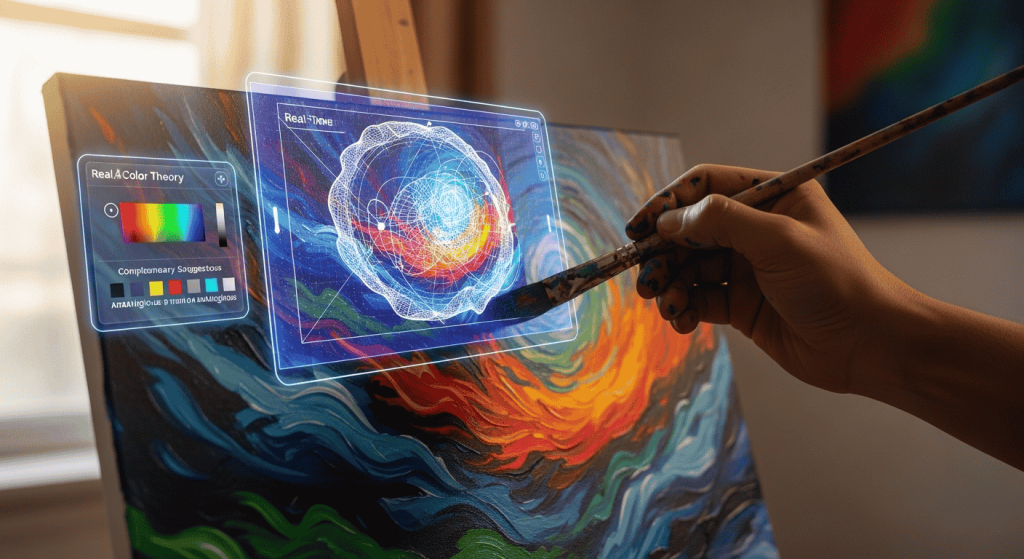
The rise of artificial intelligence has ushered in powerful tools—from generative AI that composes music to AI that writes prose. But as these innovations proliferate, many wonder: is this evolution helping or harming human creativity? This article navigates the balance between AI’s advantages and the potential threat to creativity.
Chat GPT-5: The Future of AI-Powered Conversations
The Power and Promise of Generative AI
Generative AI tools like ChatGPT, DALL-E, and similar technologies are reshaping creative workflows:
-
They support rapid ideation, enabling creators to explore more possibilities at speed .
-
In many cases, AI enhances individual performance and can spark ideas—especially for creators experiencing mental blocks .
-
AI simplifies tedious tasks, freeing humans to focus on storytelling, empathy, and cultural nuance.
Where AI Falls Short—And Why It Can Threaten Creativity
H3: Homogenization and Reduced Diversity
Studies—like those from Wharton—show that while generative AI can improve idea quality, it often leads to repetitive concepts, limiting diversity and innovation .
Over-Reliance Risks Dulling Creative Skills
Experts warn that leaning too heavily on AI and creativity can shrink human initiative, weakening essential creative processes over time .
Ethical and Legal Implications
Creatives across industries are raising alarms: AI often uses copyrighted material without consent or compensation, leading to moral harm and devaluation of creative labor .
Critics argue that unchecked AI can spread mediocrity, replacing genuine originality with “good enough” automation .
AI-Enabled Smart Gadgets: The Future of Everyday Living
AI as a Creative Partner, Not a Competitor
-
Research indicates that artificial intelligence can assist creators without replacing them—enhancing ideas without diminishing individuality .
-
AI excels at augmenting, not overshadowing: human judgment, emotion, and strategy remain irreplaceable .
-
Recent demand trends show clients increasingly seeking the originality of human-generated content, especially in fields like writing and design .
Humanoid Robotics for Personal Use: A Smart Future at Home
Quick Comparison
| Aspect | AI Impact | Human Creativity Role |
|---|---|---|
| Speed & Idea Quantity | Generates many ideas quickly | Adds depth, nuance, emotional resonance |
| Diversity | Tends toward sameness | Enables novel, divergent thinking |
| Ethical & Legal Concerns | Raises copyright and moral issues | Upholds integrity, consent, emotional value |
| Collaboration Potential | Efficient drafts and ideation triggers | Shapes narrative, context, and meaningful use |
FAQ
1. Is artificial intelligence really a threat to human creativity?
Not entirely. While there is a genuine threat to creativity in over-reliance and ethical lapses, AI also offers powerful collaboration potential when used mindfully.
2. What are the risks of using generative AI for creative work?
Risks include creative homogenization, devaluation of human authors, and legal/ethical challenges involving consent, ownership, and originality.
3. How can AI and creativity coexist positively?
By viewing AI as an ally—one that accelerates drafts and ignites ideas—while reserving judgment, emotional intelligence, and novelty for human hands.


